By Culinarian Solutions
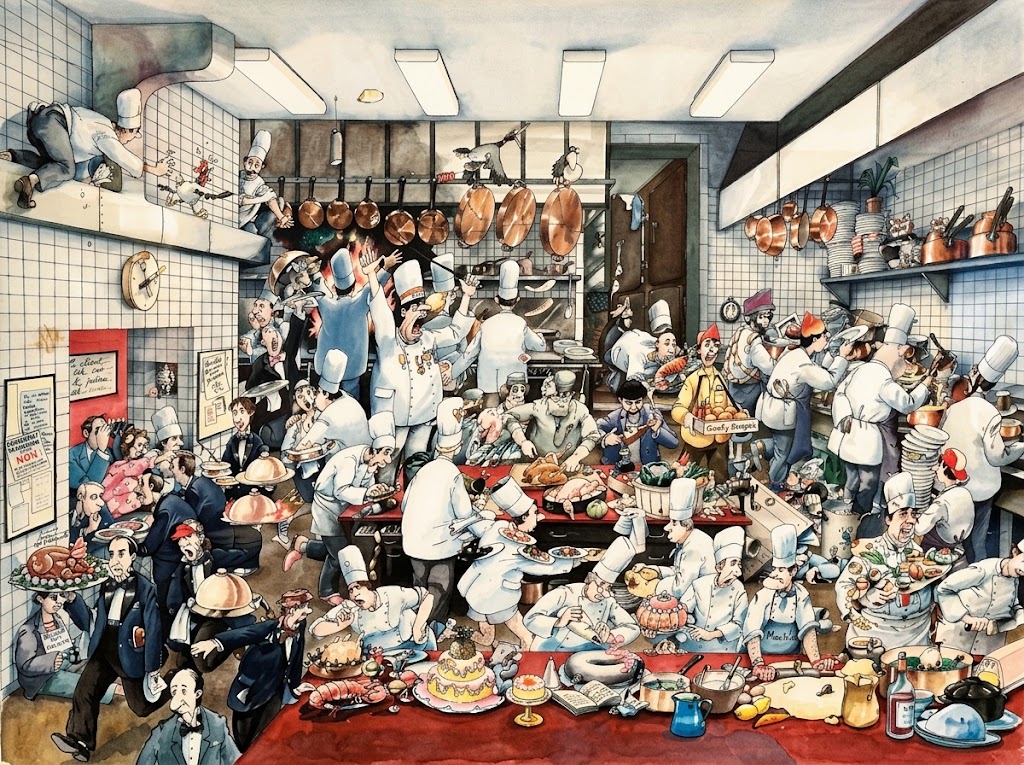
“Organized chaos” is the standard phrase used to describe most culinary operations, often worn as a badge of honor by those who survive the dinner rush. In reality, it is not a sign of a bustling, successful restaurant. It is the direct byproduct of a kitchen where no one has taken the time and effort to implement proper procedures, protocols, and foundational teaching.
The Job Security Myth and the Bottom Line At the root of this chaos is a fundamental failure of leadership, often driven by fear. It is remarkably common for an Executive Chef to deliberately withhold proper cooking techniques or complete recipes from their line cooks. They treat their exact recipes and superior execution as their personal job security. Their internal fear is simple: if they teach the staff everything they know, ownership will realize the cooks can run the line without them, and the high-paid Chef will be out of a job.
Some restaurant owners unfortunately validate this fear. They mistakenly believe that once the recipes are standardized and the staff is trained, the Executive Chef is an expendable overhead cost. What both sides fail to understand is that chaos costs cash.
When a Chef refuses to train their team, they become trapped working 60-hour weeks, running from station to station to put out fires. An Executive Chef stuck on the line means nobody is managing food costs, monitoring waste, engineering the menu, or negotiating with vendors. When an owner fires a Chef who has actually built a self-sustaining team, they lose the exact visionary capable of expanding their enterprise.
The Ego on the Line On the other side of the pass, you have the kitchen staff. Kitchens are high-pressure environments, which naturally breeds defensive egos. Many cooks will never open their mouths to say, “I don’t understand this,” or “Can you show me the best way to do this?” because they are terrified of exposing their knowledge gaps and losing their shifts.
The result is a profoundly chaotic environment where the Chef cannot rely on the staff’s actual abilities and instead continually compensates for their inadequacies until burnout inevitably sets in.
The Google Recipe Epidemic This lack of formalized training is compounded by a modern crutch: the younger generation of chefs abandoning culinary textbooks in favor of Googling recipes. Anyone with a keyboard can publish a recipe and declare themselves an expert, resulting in millions of disjointed, unverified dishes.
There is a reason classic dishes became classics. They were built on foundational techniques. But as corporate America took over the restaurant business, they cut out high-end ingredients and modified these techniques to make food easier and faster to produce with cheaper labor. The old kitchen adage holds true: garbage in, garbage out. You cannot modify the technique and expect the same result. Culinary arts are fundamentally chemistry—it is about the specific chemical reactions that occur when heat is applied and ingredients are incorporated correctly.
The Blueprint for a Magnet Kitchen The only true solution to this chaos is to actively guide and develop your cooks. As a culinarian, you have a strict obligation to freely give back the knowledge and skills that your own mentors gave to you. Your goal should be to teach your staff to be better cooks than you are.
To build a “Magnet Kitchen,” you must implement structure:
- Ditch the verbal instructions: Do not just hand a cook a list of ingredients. Give them well-formatted, detailed recipes and a highly organized prep book.
- Use true reference materials: When a cook struggles with a sauté or a grill station, don’t just answer off the top of your head. Pull a section from a classical culinary textbook written by true masters.
- Make them demonstrate: Hand them the text, ask them to read the foundational principles, and then have them show you the proper procedure during service.
In this day and age, a kitchen that actively teaches its staff becomes a magnet for professionals who want to develop their craft, not just collect a paycheck. This apprentice-style environment directly overcomes the current labor shortage. Young culinarians will seek out your kitchen and happily accept an average wage—because the immense value of the daily instruction they receive means they are building the cooking and management skills necessary to command a much higher salary in the future.
Stop Managing the Chaos. Start Managing a Kitchen. Proper teaching eliminates the chaos. It elevates the food, reduces turnover, and ultimately drives the profitability of the entire operation.
At Culinarian Solutions, we help restaurant owners and Executive Chefs break the cycle of burnout and high turnover. We implement the structured recipe standards, classical training frameworks, and prep systems needed to turn your kitchen into a magnet for culinary talent.
You don’t have to navigate the labor shortage alone. Contact Culinarian Solutions today to see how we can stabilize your kitchen and improve your bottom line.
Leave a Reply